
Pediatric dentistry
Prevention and cavity care for children
Children's teeth respond very well to prevention — as long as it starts early and stays consistent. Any plan starts from an assessment of how cavity-prone a particular child's teeth actually are.

What prevention actually addresses
Tooth decay does not appear overnight. It is the result of bacteria, sugar, time and how resilient the enamel is. Preventive care works on all four of those — and the balance is different for every child.
One child needs nothing more than good brushing and a check-up twice a year. Another has deep grooves in the molars, wears braces, or sips sweetened drinks through the day, and needs shorter intervals and extra protection. That is why every prevention plan starts with an assessment of individual cavity risk.
What happens at a prevention appointment
The sequence is always the same. That predictability is what makes children comfortable.
- 1
Settling in and looking
The appointment starts with counting, looking and explaining. Every tooth is checked, the gum line is assessed, and anything that has changed since the last visit is recorded.
- 2
Making plaque visible
A disclosing solution stains plaque. Children can see for themselves where the brush has not been reaching, which is far more convincing than being told.
- 3
Cleaning the teeth
The stained deposits are removed gently and the teeth are polished. A smooth surface makes it harder for new plaque to settle.
- 4
Brushing practice
The child practises on their own teeth, using a routine that suits their age. Parents are shown exactly which areas still need following up at home.
- 5
Protection and planning ahead
A fluoride varnish can be applied at the end. When the next appointment makes sense is then decided together.
What matters at which age
Prevention for a toddler looks nothing like prevention for a teenager in braces.
0–2 years
Getting started
Brushing begins with the first baby tooth. At this stage it is mostly about building the habit, using the right amount of toothpaste, and avoiding constant sipping of sweetened drinks.
3–5 years
Practising with supervision
Children want to brush by themselves now, and they should. Parents still need to brush again afterwards, because fine motor control is not there yet.
6–12 years
Through the mixed dentition
The first permanent molars come through and are especially vulnerable while they are only partly erupted. Closer monitoring pays off during this phase.
13+ years
Taking over
Teenagers brush independently, but often faster and less regularly. Fixed braces add a further risk of white-spot decalcification around the brackets.
What statutory health insurance covers
Children insured under the German statutory system are entitled to dental early-detection examinations and, from school age, to an individual prevention programme. The exact scope is regulated nationally and is revised from time to time.
Additional services such as a full professional cleaning are not always covered. What applies in a particular case should always be clarified before treatment, not afterwards.
What makes the biggest difference at home
Twice a day, with the right amount
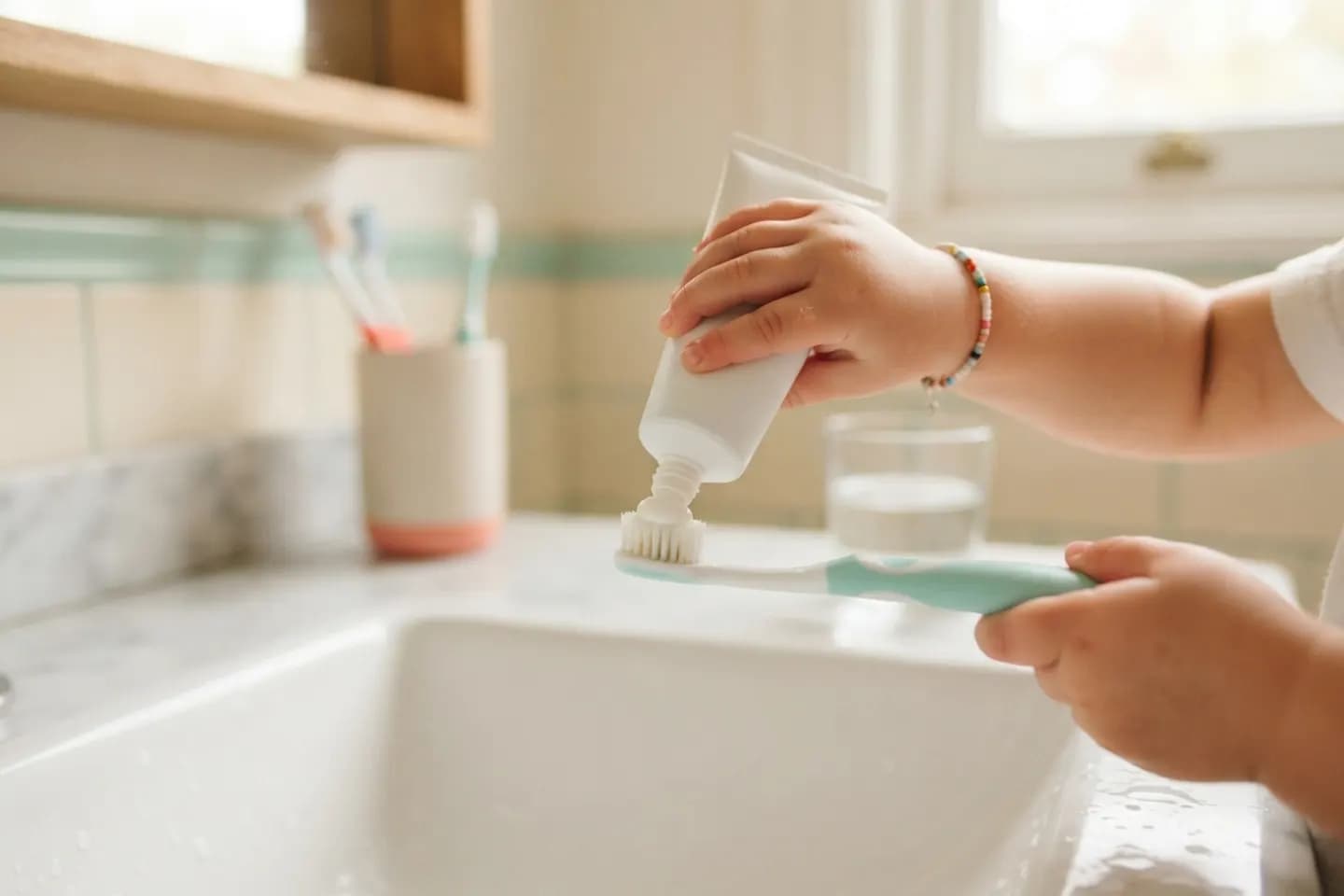
The amount of toothpaste depends on the child's age, not on the size of the brush. We cover the current recommendations in a separate guide: Choosing toothpaste for children.
Keep brushing after them
A useful rule of thumb: until a child can write joined-up handwriting neatly, their fine motor control is not good enough to clean thoroughly. Following up is part of the routine, not a lack of trust.
How often matters more than how much
For teeth, the number of sugar contacts through the day matters more than the total amount. A slice of cake after lunch is kinder to teeth than the same amount spread across the afternoon.
Common questions about prevention
How often should my child come for a check-up?
Twice a year suits most children. Shorter intervals can make sense with a higher cavity risk, during the change of teeth, or with fixed braces. The interval is set individually.
Is a cleaning uncomfortable for children?
Usually not. Cleaning is done with soft rotating brushes and polishing paste, not with sharp instruments. If a child is sensitive, a slower pace with each step explained beforehand helps.
My child already has cavities. Is prevention still worth it?
Especially then. Once the treatment is done, the goal is that no new decay develops. That means finding the cause, which often lies in brushing technique, drinking habits, or simply teeth that are hard to reach.
Related treatments

Fissure sealants
The deep grooves in permanent molars are sealed while they are still healthy, so decay cannot take hold.
Learn more
Fluoride treatment
Fluoride varnish makes enamel more resistant. How often it is worth applying depends on cavity risk.
Learn more

Chalky teeth (MIH)
Porous enamel with sharply outlined patches, often sensitive and prone to decay. Treatment depends on severity.
Learn more
Questions about cavity prevention?
Whether and when any of this applies to your child is best worked out in a conversation.