
Pediatric dentistry
Fluoride for children
Fluoride works exactly where decay starts: at the surface of the enamel. It makes enamel more resistant to acid and helps repair damage that has only just begun.
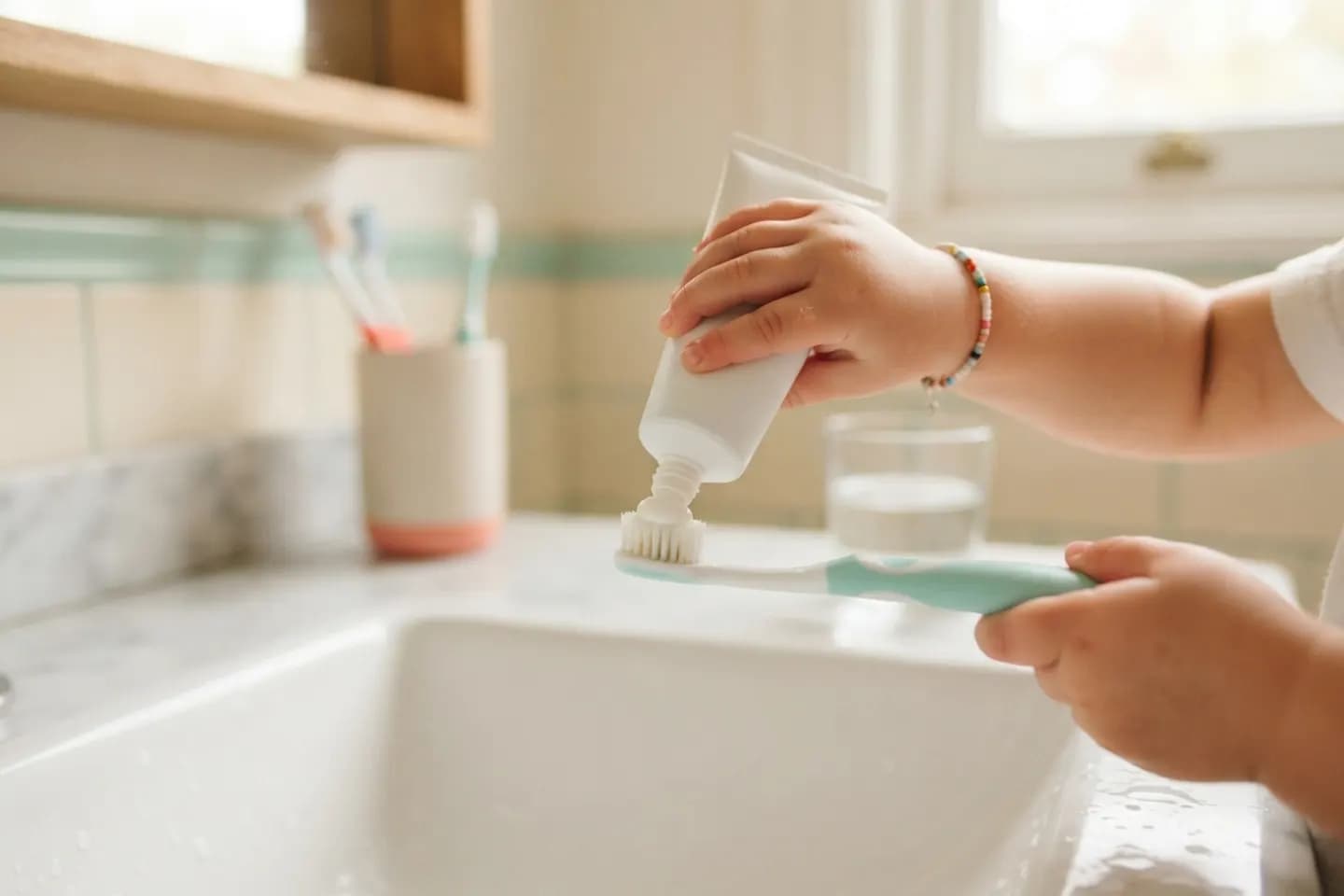
What fluoride actually does in the mouth
When bacteria break down sugar, they produce acids that dissolve minerals out of the enamel. This happens every day, and saliva normally balances it out again.
Fluoride shifts that balance: it slows mineral loss, speeds up the reverse process, and forms a surface layer that acid attacks less easily. What matters is frequent contact in small amounts, not one large dose.
How children get fluoride
These sources complement each other — they do not replace one another.
Toothpaste
The most important route. Both the amount and the fluoride concentration depend on the child's age.
Fluoride varnish
Applied to cleaned teeth at the dentist; it keeps working for several hours afterwards.
Fluoridated table salt
Works through everyday meals when it is used for cooking at home.
Tablets
Only on dental or paediatric advice — and not at the same time as fluoride toothpaste.
Why toothpaste is part of the conversation
The different sources of fluoride should not quietly add up. Any advice therefore depends on which toothpaste is used, whether cooking is done with fluoridated salt, and whether the child takes tablets.
In Germany the recommendations for infants and toddlers were agreed jointly between paediatric dentistry and paediatrics, and they are based on the child's age. Which one applies to a particular child is an individual question — more in our guide.
Fluoride varnish at a dental visit
The varnish is painted on with a small brush, sets on contact with saliva, and most children barely notice the taste. For a few hours afterwards:
- avoid hard food; soft food is fine
- skip brushing for the rest of that evening
- everything is back to normal the next day
How often varnish is worthwhile depends on cavity risk. Shorter intervals often make sense for children with visible decalcification, with chalky teeth (MIH), or with fixed braces.
Common questions about fluoride
Is fluoride harmful for children?
Not in the recommended amounts. What matters is not combining sources without oversight and sticking to the age-appropriate amount of toothpaste. Toothpaste should be kept out of reach of small children.
What are the white marks on my child's teeth?
Dull white patches are often early decalcification — decay at its earliest stage, which can frequently still be stopped without drilling. Sharply outlined white-to-yellow patches are a different thing and may indicate chalky teeth, which is managed differently.
Related treatments

Prevention & cavity care
Regular check-ups, cleaning and age-appropriate coaching, so that cavities have as little chance as possible to start.
Learn more

Fissure sealants
The deep grooves in permanent molars are sealed while they are still healthy, so decay cannot take hold.
Learn more

Chalky teeth (MIH)
Porous enamel with sharply outlined patches, often sensitive and prone to decay. Treatment depends on severity.
Learn more
Questions about fluoride?
The right amount and concentration depend on your child's age and on every source they are already getting.