
Guide
Which toothpaste is right for my child?
There are dozens of brightly decorated tubes on the shelf. The differences that actually matter are in the small print on the back.
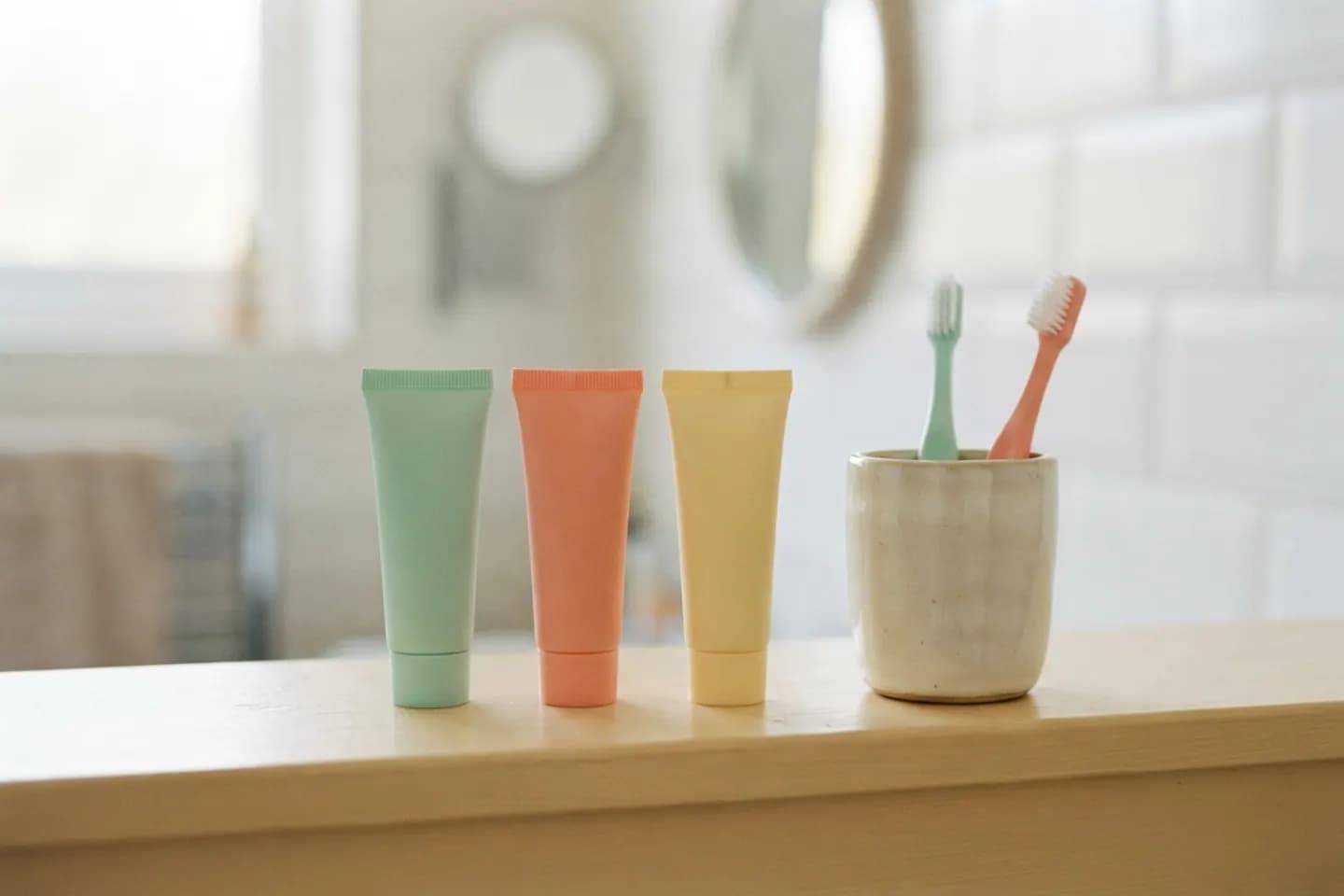
What actually matters
- The fluoride content has to match your child's age — it is printed in ppm on the pack.
- The amount depends on age, not on the length of the brush head.
- Fluoride sources should not be stacked without oversight.
- Flavour is allowed to decide — as long as the first three points hold.
Point four is not a compromise: a toothpaste a child accepts gets used twice a day. A “better” one they refuse does not.
Not toothpaste and tablets at the same time
Fluoride toothpaste and fluoride tablets are not meant to be used in parallel. If your child takes tablets, please raise it at the appointment so the advice can be adjusted accordingly.
Fluoridated table salt counts as a source too. It is not a problem in itself, but it belongs in the overall picture. There is more under fluoride treatment.
Two common misunderstandings
“Fluoride-free is gentler”
Toothpaste without fluoride still cleans mechanically, but the central protective effect is missing. If you would prefer to avoid fluoride, raise it at the appointment — that calls for a different strategy.
“Children's toothpaste lasts until they leave school”
The recommended fluoride content rises with age. A tube that was right for a toddler is under-dosed for a school-age child.
Related guides

Brushing a baby's teeth
The short answer: with the first tooth. The longer answer is about amount, technique and handling resistance.
4 min read
Bring the tube with you
At the appointment it can be checked together whether it fits.
Last updated on 26 August 2026