
Pediatric dentistry
Fillings for baby teeth and permanent teeth
A decayed baby tooth is not something to wait out. It will eventually hurt, it can damage the permanent tooth developing underneath, and it holds space for the adult set.
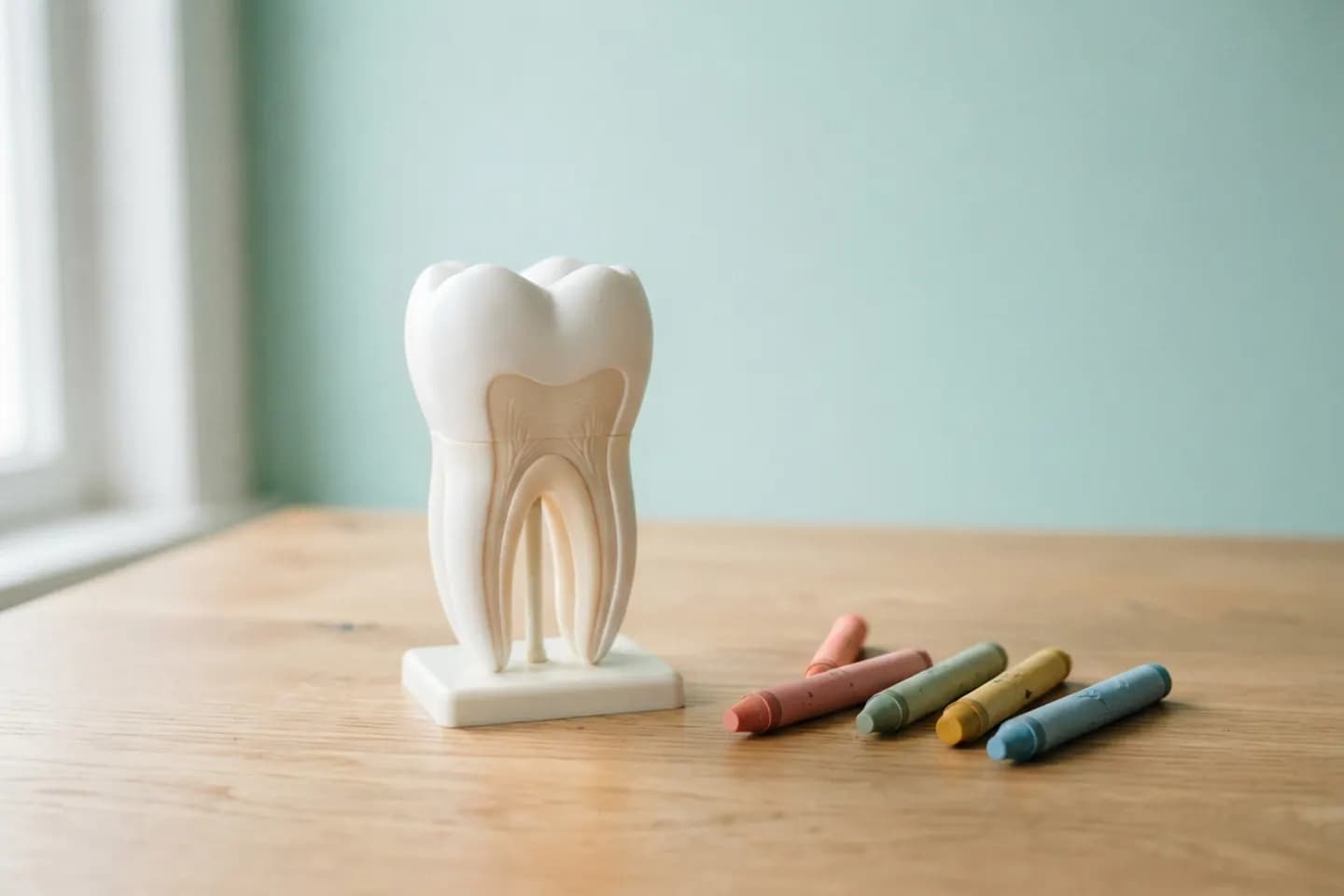
“It's going to fall out anyway”
It is an understandable thought, but it does not hold up. Baby molars stay in the mouth until roughly age ten to twelve. Until then they chew, they hold space, and they guide the permanent teeth into position.
If deep inflammation develops, it can damage the tooth bud underneath. And if a baby tooth is lost early, the neighbouring teeth drift into the gap — leaving too little room later and often requiring a space maintainer.
What happens during treatment
- 1
Explaining first
Every instrument should be shown and named before it goes anywhere near the mouth, so children know what is coming — and what is not.
- 2
Numbing, if needed
A gel numbs the area before any injection, and the anaesthetic is given time to take effect properly rather than starting early.
- 3
Removing the decay
The softened tooth structure is removed — as much as necessary, as little as possible.
- 4
Filling and curing
The cavity is filled and the tooth sealed again so bacteria cannot get back in.
- 5
Checking the bite
Finally the bite is checked so the filling does not interfere when the child bites down.
Which material for which tooth
Baby teeth and permanent teeth have different requirements: a baby tooth needs to last a few more years, a permanent tooth a lifetime. The size of the cavity, its position in the jaw and how well the child can cooperate all play a part too.
If a tooth is so badly broken down that a filling would have nothing solid to hold on to, a pediatric crown is often the more durable answer. The options should be gone through before treatment starts.
If your child is anxious
A first appointment does not have to be a filling. It is often better to start with a visit that involves nothing but getting to know the place, and build up step by step.
You can read how a step-by-step approach works on gentle dentistry for anxious children.
Common questions
Will my child need an injection?
Not every treatment needs anaesthetic. Small, shallow cavities often do not. When it is needed, it should be prepared for and explained in child-friendly terms rather than sprung on the child.
How long does an appointment take?
With children, shorter appointments and more of them usually work better. A child who gets up satisfied after twenty focused minutes will come back willingly next time.
Related treatments

Baby tooth root canal
When decay reaches the nerve, treating the pulp can keep a baby tooth in place until it falls out naturally.
Learn more

Pediatric crowns
When a filling has nothing left to hold on to, a preformed crown protects the tooth until it is replaced.
Learn more

Prevention & cavity care
Regular check-ups, cleaning and age-appropriate coaching, so that cavities have as little chance as possible to start.
Learn more