
Pediatric dentistry in Düsseldorf
Where tears turn into a smile
From the first baby tooth to the full adult set. These pages explain what children's teeth need, what is due at which age, and what matters between two appointments.
- Pediatric dentistry from 0 to 18
- Every page in English and German
- Written for parents, not for the journals
Kids Smile in Bilk
What matters in pediatric dentistry
Three principles that an appointment with a child should live up to.
Explain first, treat second
Children cope far better when no instrument goes into their mouth before they have seen it. It costs a few minutes and often saves entire appointments.
As little treatment as necessary
The earlier a change is found, the smaller the intervention. That is why prevention counts for more than repair in children's dentistry.
Parents are part of it
Parents should hear what was found, what it means and what the options are — before anything is decided, not afterwards.
Pediatric dentistry topics
Explained clearly — from routine prevention through to care after a dental accident.
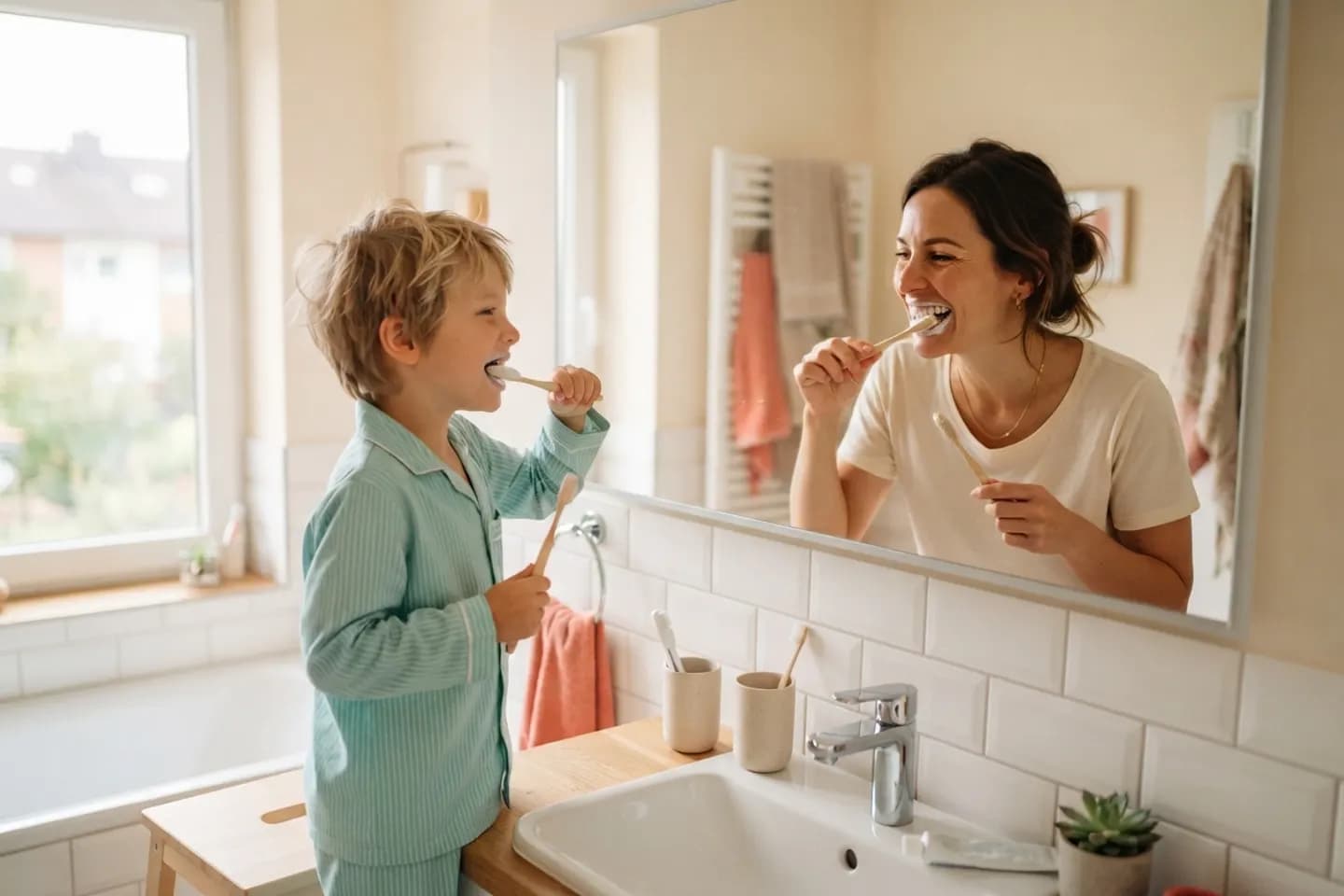
Prevention & cavity care
Regular check-ups, cleaning and age-appropriate coaching, so that cavities have as little chance as possible to start.
Learn more

Fissure sealants
The deep grooves in permanent molars are sealed while they are still healthy, so decay cannot take hold.
Learn more

Fluoride treatment
Fluoride varnish makes enamel more resistant. How often it is worth applying depends on cavity risk.
Learn more
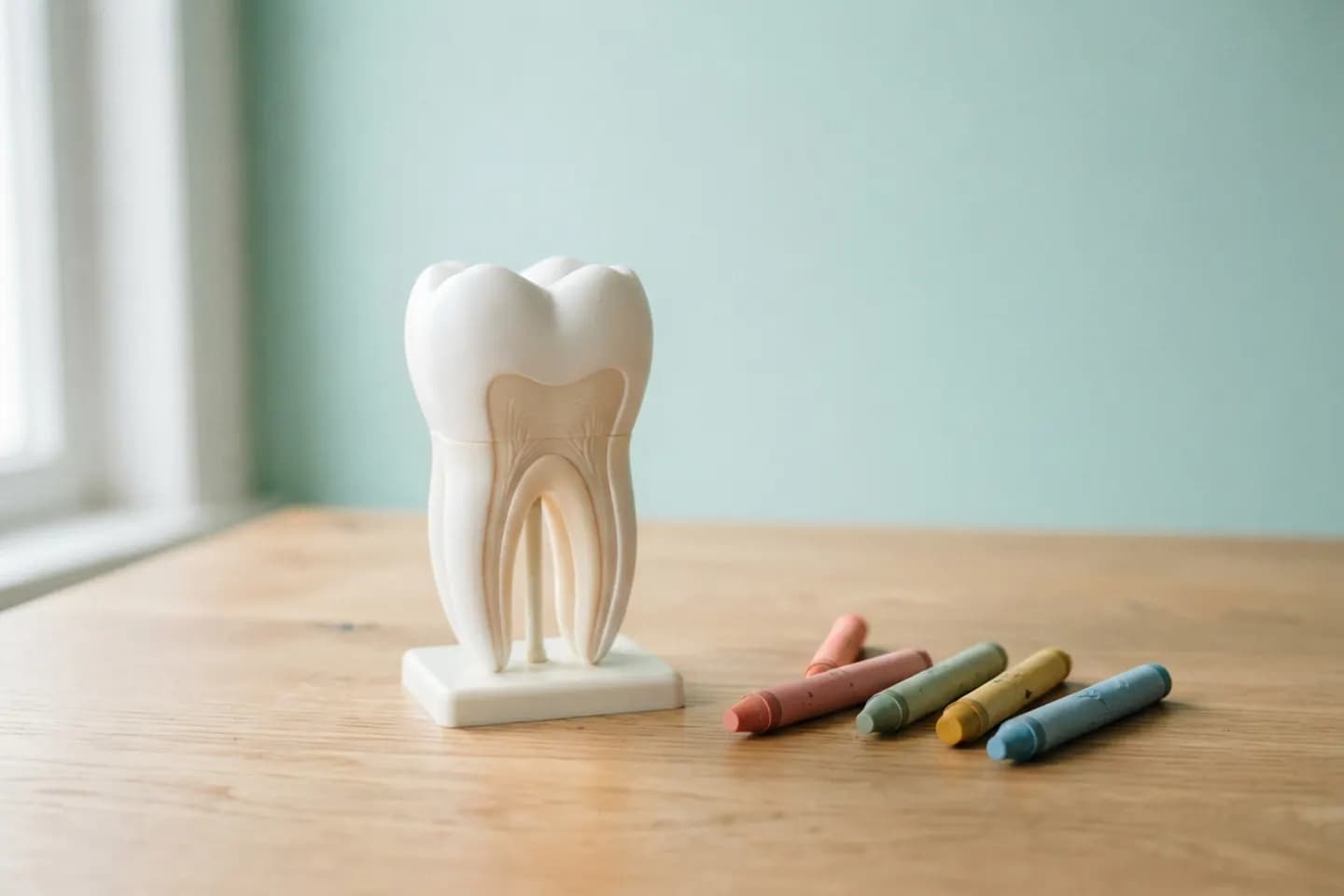
Fillings
Once decay has broken through the enamel, the damage is removed and the tooth is sealed again.
Learn more

Baby tooth root canal
When decay reaches the nerve, treating the pulp can keep a baby tooth in place until it falls out naturally.
Learn more

Pediatric crowns
When a filling has nothing left to hold on to, a preformed crown protects the tooth until it is replaced.
Learn more

Chalky teeth (MIH)
Porous enamel with sharply outlined patches, often sensitive and prone to decay. Treatment depends on severity.
Learn more

Dental trauma
A broken or knocked-out tooth is time-critical. What counts in the first few minutes — and afterwards.
Learn more

Space maintainers
When a baby tooth is lost too early, neighbouring teeth drift. A space maintainer holds the room for the permanent tooth.
Learn more
Typical starting points
Four situations that send parents looking for a pediatric dentist, and where to read more about each.
The first visit is coming up
Your child has never been to a dentist and you want the first experience to go well.
Your child is anxious
An earlier appointment went badly, or your child will not let anyone look inside their mouth.
Patches on the new teeth
The newly erupted molars look patchy or react sensitively.
Prevention is where the leverage is
Most of the treatment children need would have been avoidable. So pediatric dental care starts from the same question every time: how high is this child's cavity risk right now, and what follows from that?
The answer determines how often your child should come in, whether fissure sealing is worthwhile, how frequently fluoride is applied, and what to work on at home.
The team
Team profiles will be added once the practice has confirmed who works here. Names, qualifications and photographs are only published once they are confirmed.
Guides for parents
Short, practical answers to the questions that actually come up day to day.

Brushing a baby's teeth
The short answer: with the first tooth. The longer answer is about amount, technique and handling resistance.
4 min read

What are chalky teeth?
An enamel formation disorder that affects a lot of children — explained without the jargon.
4 min read

After a dental accident
The essential steps for the first few minutes — worth knowing before you need them.
3 min read
Frequently asked questions
From what age should a child see a dentist?
From the first baby tooth. In pediatric dentistry that first appointment is mainly about getting to know each other and about advice — as a rule, nothing is treated.
Is this site available in German too?
Yes. Every page of this site exists in full in English and German, and the language selector is at the top. Which languages are spoken at appointments is worth asking about when you arrange one.
How does pediatric dentistry differ from dentistry for adults?
Baby teeth have a different anatomy, a different time horizon and different treatment goals. On top of that comes behaviour guidance: a child has to understand what is happening, or even the best technique will not work.
On the ground floor
There for the grown-ups, too.
Directly below us, on the ground floor of the same building on Bilker Allee, is DENTsuva — a dental practice in Düsseldorf-Bilk since 1969. One building, two floors.
Kids Smile
First floor · Pediatric dentistry
DENTsuva
Ground floor · Dentistry
Contact and opening hours
Address
Bilker Allee 56
First floor
40219 Düsseldorf
- Phone
- +49 211 30 8065
- Fax
- +49 211 30 5570
- termin@dent-suva.de
Opening hours
The children's practice's opening hours will be published once they are fixed. Until then, please ask by phone.
Dental accidents and urgent cases
Dental injuries are time-critical. Please call rather than sending a message.
Dental injuries are time-critical: the sooner an injured tooth is assessed, the more treatment options remain. Please call rather than waiting for the next routine appointment.
Outside opening hours, the out-of-hours dental service run by the Nordrhein dental association is responsible. If there is heavy bleeding, loss of consciousness, or injuries beyond the mouth, call the emergency services on 112.
Getting here
By public transport
- Tram lines 706, 707 and 709
- Suburban rail S8, S11 and S28
- Stops: Bilker Kirche, Kronprinzenstraße and Völklinger Straße
Book an appointment for your child
The request form has fields for your child's age and for what the appointment is about.