
Pediatric dentistry
Root canal treatment on a baby tooth
Once decay reaches the pulp, a filling is no longer enough. The goal then is to keep the tooth free of pain and inflammation until it comes out on its own.

What the treatment involves
In a baby tooth, the whole nerve often does not need to be removed — only the inflamed part inside the crown. The tissue in the roots stays alive if it is healthy. This approach is called a pulpotomy.
Whether it is possible only becomes clear during treatment: if the tissue at the canal entrances bleeds in a controlled way, it is still vital and the tooth can be treated this way. If inflammation has spread further, other steps are needed.
Step by step
- 1
Numbing
The tooth is fully anaesthetised before anything begins.
- 2
Removing decay
Decayed material is taken away until the pulp is reached.
- 3
Removing inflamed tissue
The affected part of the pulp is removed and the area is settled.
- 4
Dressing
A well-tolerated material is placed over the remaining vital tissue to seal the area.
- 5
Sealing securely
The tooth is closed tightly — usually with a pediatric crown when a lot of structure is missing.
Why a crown usually follows
A tooth that has lost a lot of structure fractures more easily under chewing load. A tight, stable seal is decisive for success, because otherwise bacteria find their way back in.
That is why a pediatric crown is often placed instead of a large filling.
When removal is the better option
Not every baby tooth can be saved. Reasons against trying to keep it include:
- extensive inflammation that already involves the bone
- a tooth that is close to falling out naturally anyway
- damage so advanced that a tight seal is no longer possible
If a baby tooth has to come out well before its time, it should be checked whether a space maintainer is needed so the gap does not close up.
Common questions
Isn't that a lot of effort for a baby tooth?
The effort pays off because the tooth has a job: chewing, holding space and guiding the permanent tooth. Losing it early usually creates more work later than keeping it does now.
Will the tooth really last until it falls out?
That is the aim, but it is not a guarantee. The tooth is monitored at routine check-ups so that later inflammation can be acted on.
Related treatments

Pediatric crowns
When a filling has nothing left to hold on to, a preformed crown protects the tooth until it is replaced.
Learn more
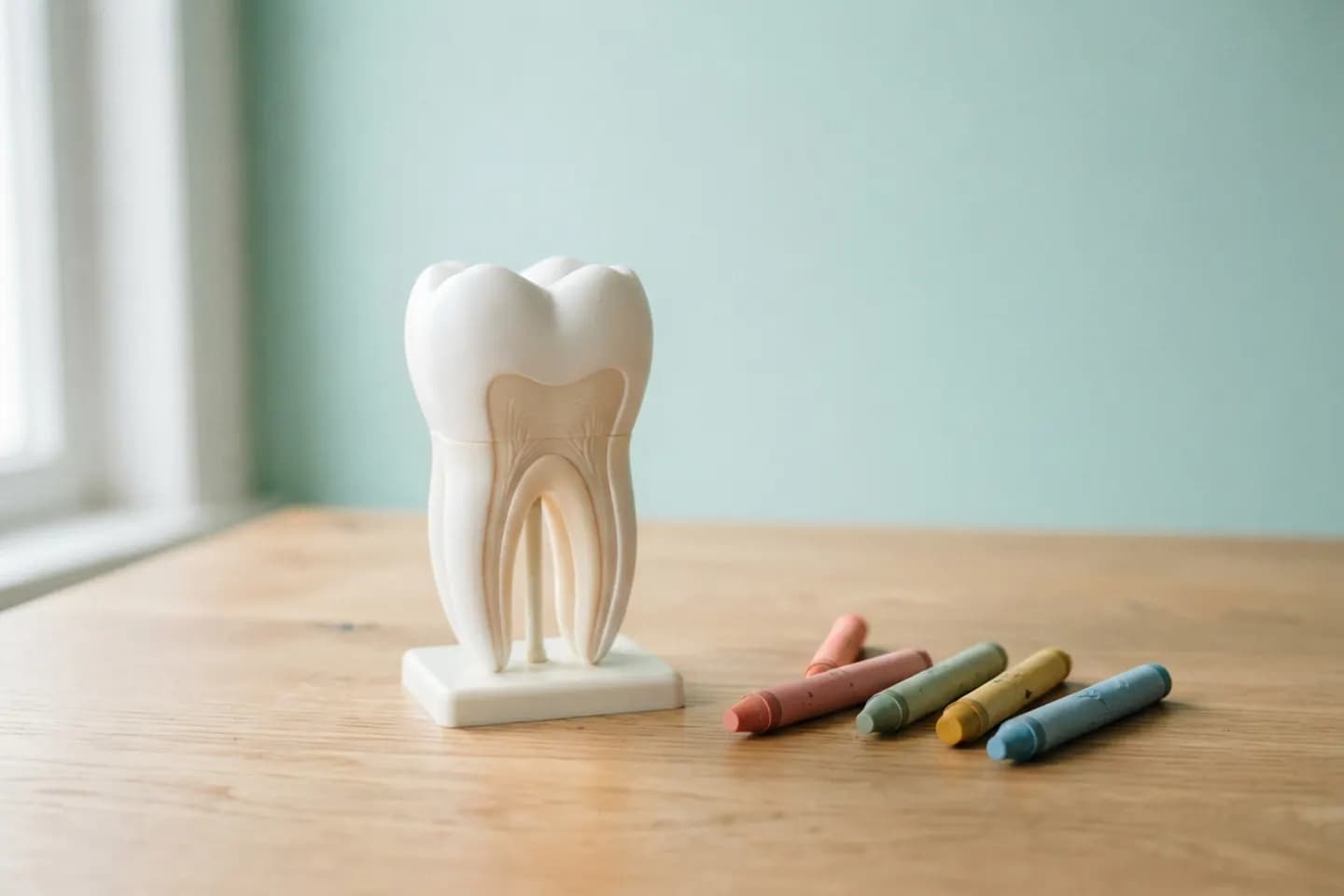
Fillings
Once decay has broken through the enamel, the damage is removed and the tooth is sealed again.
Learn more

Space maintainers
When a baby tooth is lost too early, neighbouring teeth drift. A space maintainer holds the room for the permanent tooth.
Learn more
Is your child in pain?
Persistent pain, or pain that wakes a child at night, should be looked at promptly.