
Guide
Losing baby teeth: what happens when
The change of teeth stretches over several years. The normal range is wide — “late” is far more often striking than actually a problem.
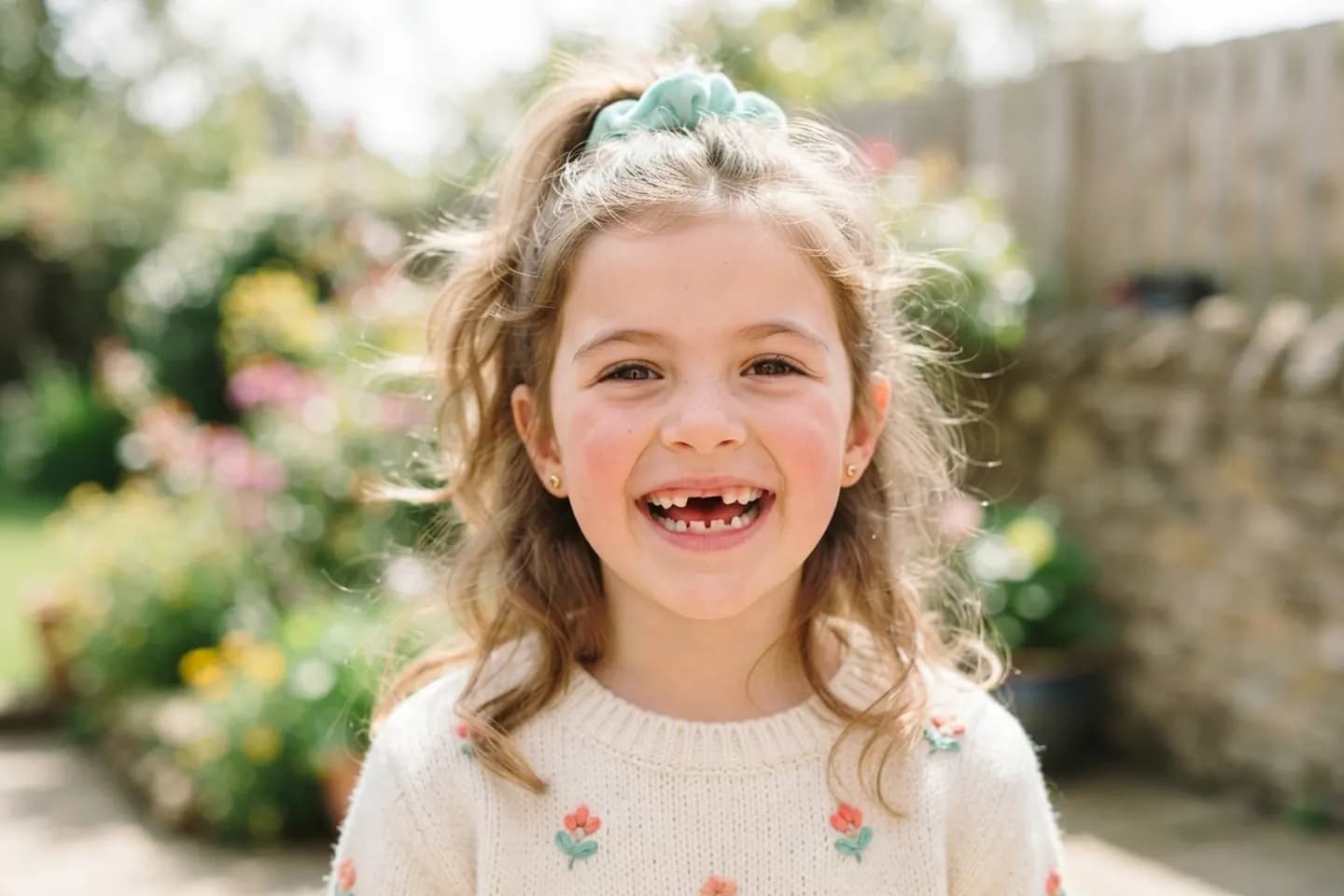
The rough order
It usually starts with the lower front teeth, often around age six. At about the same time a new tooth comes through behind the baby molars without any baby tooth falling out: the first permanent molar.
That tooth is often missed precisely because no wobbly tooth announces it. It is vulnerable to decay while it is only partly erupted — a common reason for fissure sealing.
When to ask
- A permanent tooth comes through behind a baby tooth that is still firmly in place.
- A gap stays empty for a strikingly long time.
- A baby tooth is lost early through decay or an accident.
- Your child consistently chews on one side or complains of pressure.
After an early loss it is worth checking whether a space maintainer makes sense, so the neighbouring teeth do not drift into the gap.
Brushing during this phase
In a mixed dentition, teeth of different heights sit side by side. The brush skims over the lower ones — and that is exactly where decay starts.
It helps to brush newly erupting molars deliberately, holding the brush across them, rather than sweeping along the row in the usual motion.
Related guides

Cavities in baby teeth
What decay looks like in young children, why it is treated, and the habits that raise the risk most.
5 min read
Something looking unusual?
Last updated on 26 August 2026